Home / Artworks / Head of Sekhmet
Head of Sekhmet
Unknown maker (Egypt), c. 1391–1353 BCE
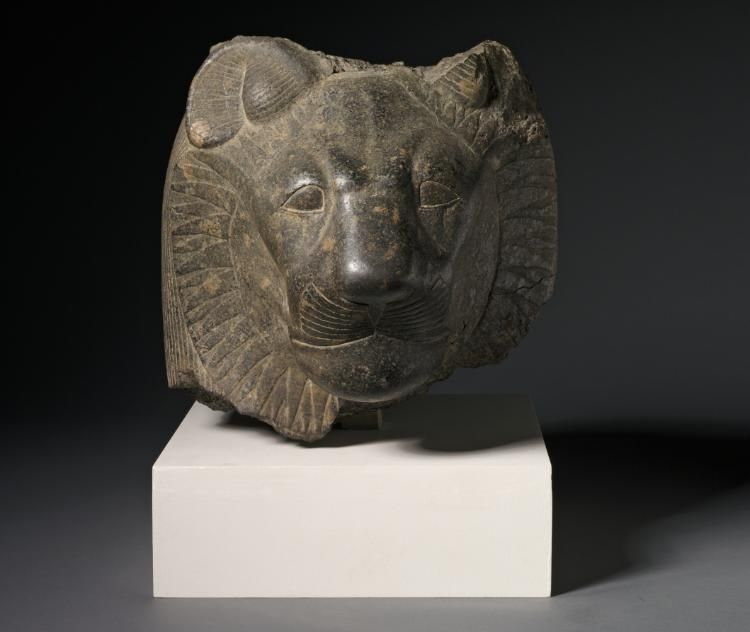
Sekhmet, whose name means the powerful one, was an Egyptian goddess shown as a lioness. This head once belonged to a large statue of her, probably seated and wearing a tight dress. The Cleveland Museum of Art says the pharaoh Amenhotep III, often called beloved of Sekhmet, commissioned hundreds of large granodiorite statues of her for his mortuary temple at Thebes. Perhaps he hoped to appeal to her healing side.
This head probably comes from Thebes, and may later have been moved across the Nile, as many were, to the temple of Mut at Karnak. Behind her stylised ruff, Sekhmet wears a wig that was once crowned with a sun disk and a uraeus, the stylised cobra that stood for royal or divine power.
The head is about 33 centimetres high. It dates from around 1391 to 1353 BCE.
From the museum record
| Artist | Unknown maker (Egypt) |
|---|---|
| Date | c. 1391–1353 BCE |
| Medium | Granodiorite |
| Size | Overall: 33.4 x 31.5 x 32 cm |
| Museum | The Cleveland Museum of Art |
| Credit line | Gift of the John Huntington Art and Polytechnic Trust |
| Accession number | 1916.2011 |
| Licence | Open Access (CC0) |
Source: The Cleveland Museum of Art collection record. Facts such as dates, sizes and credit lines come from that record. The write-up above was drafted with AI assistance and checked against the museum record and standard references. Spotted a mistake? Tell us.