The Thinker
Auguste Rodin, c. 1880
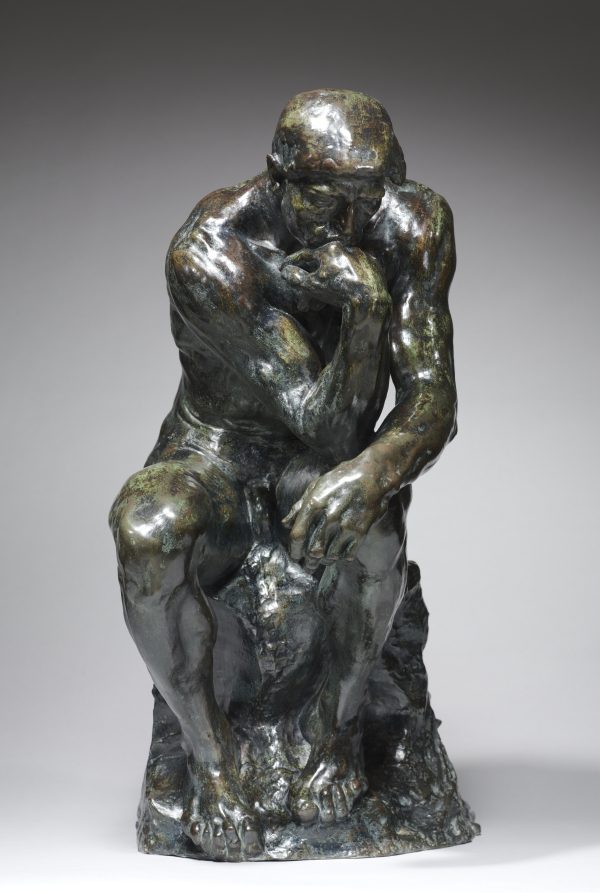
Auguste Rodin first imagined The Thinker as part of a huge sculptural doorway called The Gates of Hell. According to the Cleveland Museum of Art, he conceived the figure as the poet Dante, sitting at the top centre and looking down on the damned figures below, inspired by Dante's Divine Comedy.
The figure is naked, and the muscles of his back, arms and legs are tense. He leans forward as if ready to spring up, yet he is also caught in stillness. The museum reads the body's energy as a symbol of mental effort and creative work. Rodin later produced separate versions of The Thinker, first at this size and then in a monumental one.
This bronze in Cleveland dates to about 1880 and is about 71 centimetres high. The museum says it is an independent version made in the original size, so it can be seen on its own, away from the doorway it was designed for.
From the museum record
| Artist | Auguste Rodin |
|---|---|
| Date | c. 1880 |
| Medium | Bronze |
| Size | Overall: 70.8 x 34.9 x 59.7 cm |
| Museum | The Cleveland Museum of Art |
| Credit line | Gift of Alexandre P. Rosenberg |
| Accession number | 1979.138 |
| Licence | Open Access (CC0) |
Source: The Cleveland Museum of Art collection record. Facts such as dates, sizes and credit lines come from that record. The write-up above was drafted with AI assistance and checked against the museum record and standard references. Spotted a mistake? Tell us.