Home / Artworks / Diana and Her Nymphs Departing for the Hunt
Diana and Her Nymphs Departing for the Hunt
Peter Paul Rubens, c. 1615
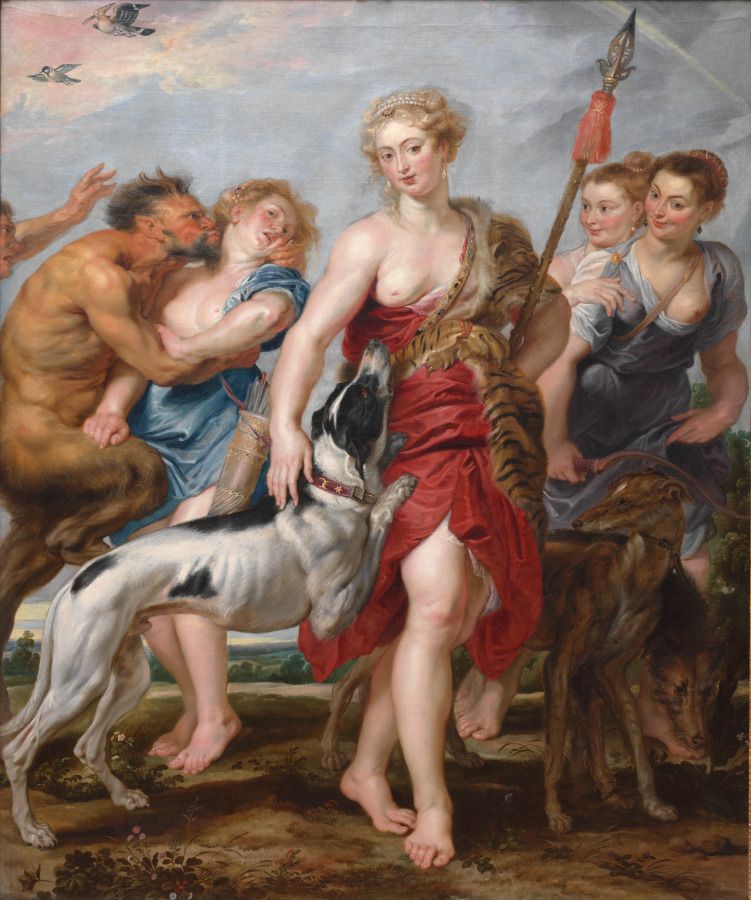
Diana is the Roman goddess of the hunt, and the crescent on her forehead also marks her as the moon goddess. She lived apart from men with a band of nymphs, and she often stood for unattainable beauty or chastity.
At the left a nymph fends off a lustful satyr, which the Cleveland Museum of Art reads as a struggle between vice and virtue, mixing a sensual display of bodies with a moral message. Rubens brings the full-bodied figures to the front of the picture, and Diana steps forward, which activates the space between the viewer and the scene.
The nymph on the right has the features of Isabella Brant, Rubens's wife, according to the museum, which also holds Rubens's portrait of her. The painting is credited to Rubens and workshop, and is about 216 by 179 centimetres without its frame.
From the museum record
| Artist | Peter Paul Rubens |
|---|---|
| Date | c. 1615 |
| Medium | Oil on canvas |
| Size | Unframed: 216 x 178.7 cm |
| Museum | The Cleveland Museum of Art |
| Credit line | Leonard C. Hanna Jr. Fund |
| Accession number | 1959.190 |
| Licence | Open Access (CC0) |
Source: The Cleveland Museum of Art collection record. Facts such as dates, sizes and credit lines come from that record. The write-up above was drafted with AI assistance and checked against the museum record and standard references. Spotted a mistake? Tell us.